Showing posts with label animals. Show all posts
Showing posts with label animals. Show all posts
Thursday, 26 July 2018
The potential Effects of Microplastics on Biodiversity in the south East Kent Coast
This Paper is written by myself to show
The potential Effects of Microplastics on Biodiversity in the south East Kent Coast
The potential Effects of Microplastics on Biodiversity in the south East Kent Coast
ENJOY

Monday, 4 September 2017
Microplastic Findings in UK waters a Success
The last time I posted on here was to talk about the research i was carrying through about microplastics within the UK oceans and i can proudly say it was a success. I have put the results on my linked in page for any interested readers to take a look at (the link will be placed on this blog).
For many students whom read this blog and study at university or school, I hope it does help you as a quick study guide. I will be writing more frequently again as soon the summer is over for you all, i was having a break away from this myself.
As my dissertation showed the microplastics have been found in UK waters i have decided to go on to do further study within the area. I have already looked a micro marine wildlife being affected across the South-East Kent Coast therefore I starting to come more inland to look at urban areas to view where the main sources are coming from and compare management techniques. All of this will be done with the same university i was with in my undergraduate (Canterbury Christ Church University)
If you do have any question do feel free to get in contact as always! :) and the link below is my research paper, the link will direct you to linked in but go to the Canterbury Christ Church section and click on the Marine Pollution Bulletin.
The Potential effects of Microplastics on Biodiversity across the South East Kent Coastline
I am trying to get public funding with my further study due the equipment and material that have to be used in the effort to try and reduce the amount of plastic/Microplastic that mount up in the oceans. I have set up a go fund me page in the changes of funding. But my Research is driven more from passion, the love of helping the environment thrive and still stand in such a world that is man made now. I know as humans we don't realize are actions are making things bad for animals therefore there are other humans that pick up the pieces.
Save the Oceans Please
Tuesday, 2 May 2017
Stem-Borrowing Pest
Classification
- These live within the plants stem, often found stunting growth or killing the apical meristem.
- May also infect the roots and leaves
- May be a disease vector
Nematodes
- Stem Nematodes include Ditylenchus and Aphelencoides spp.
 |
| Diagram of Ditylenchus Dipsaci
|
- plant pathogenic nematode that primarily infects onion and garlic. It is commonly known as the stem nematode, the stem and bulb eelworm or onion bloat.
- Live in the roots of the plants to infect their host.
- Symptoms of infection include stunted growth, discoloration of bulbs, and swollen stems.
Coleoptera
 |
| Cabbage Stem- Weevil |
- There's species are more often seen from spring to autumn
- The larvae develops in the stems of the brassicas and then continues its feed from there.
- Widespread throughout England and Wales
- Control used to reduce the amount is by seed treatments of gamma-HCH or Sprays of gamma-HCH, Azinphos-Methyl, Azinphos-methyl + demeton-s-methyl sulphone, chlorpyrifos or triazophos. (GRAHAM and GOULD, 1980)
Diptera
 |
| Frit Fly Life Cycle Showing that it is constantly living throughout the seasons |
- The Frit Fly usually white, yellow and black and are often found in grassy areas.
- They cause damage to new turf by destroying the stems of ryegrass, fescues and bents (use of larvae)
- Adult Flies are attracted to white objects and if a sighting of a large number of these flies could indicate larvae
- Larvae dig tunnels, infect stems and stay through winter
- Fruit Flies can be controlled by chemical sprays
Lepidoptera
 |
| Rose Stem Girdler (Species Unknown) |
- Metallic wood boring beetle
- Flathead larvae is the known youngling of the group they cause the most damage to the rose by borer tunnelling within the pithy centre of the stem.
- Swollen, gall-like area on canes
- Canes with wilted, dried leaves
- Upper portions of canes break off easily during the summer
- Tunnelling in the lower part of the cane
- Boring damage and galleries inside of the cane
- CONTROL; insecticides to kill any larvae and eggs, remove infected plants over the season and over winter
references;
GRAHAM, C. and GOULD, A. (1980). Cabbage stem weevil (Ceutorhynchus quadridens) on spring oilseed rape in Southern England and its control. Annals of Applied Biology, 95(1), pp.1-10.
Thursday, 27 April 2017
The 3 Strategies of survial
K- Strategist
- Stable environments are labelled by species with a K-strategy
 |
Elephants are within the K -species as they rear for their young to induce a higher survival rate therefore most of their energy is placed into that instead of surviving the unstable conditions they have adapted to K-strategist.
Population levels tend to remain stable
(More related to mortality then environmental influences)
R- Strategist
These tend to be small, short-lived species. whom invest all their energy in producing more offspring then the K species, the population density can get low due to parental care being minimum.
|
 |
Mice are within the R-strategy as they have so many offspring that minimum care can be giving to all off the offspring from the mother therefore she actually produces a low density due to deaths at young ages.
A table showing the Differences between R and K; |
 |
Table show the differences between R and K
|
 |
The graph above shows lifespans of fish which is a R species therefore has a short lifespan but higher density (Blue line) and Dugongs which is a K species which population level tends to remain high therefore it lives longer (red line) Bet-Hedging
some spread their life histories over variables time periods, others respond to their environments by laying eggs and then moving on.
|
 |
the graph above shows how bet hedging works the growth of the plants is unpredictable by fitness as the plant is using mechanisms of change to survive in unpredictable circumstances. PESTS! - MAINLY R-STRATEGISTS. |
What is a Pest?
What is a pest?
A troublesome and destructive animal or thing.
Types of Pests:
- Nuisances
- vectors
- competitors of food products for human or livestock consumption.
 |
| Competitors- insects that are mainly mankind's biggest threat |
 |
| Nuisances- After death the growth of Bactria will grow of this species. |
 |
| Vector- carry of diseases to animals of plants |
Wednesday, 15 March 2017
The Eukayotic Cell
Under Eukaryotic cell comes the Animal cell and Plant cell, and in comparison to the size the prokaryotic cell, the eukaryotic cell is much larger.
ANIMAL CELL
An animal cell and plant cell does have much more in common then in difference.Typical Features;
 |
| Animal cell with the added chloplasts which is only in plants |
MITOCHONDRIA;
the organelle that provides energy for the entire cell, by extracting from food during oxidative metabolism.
NUCLEUS;
command centre of the cell where DNA is located
ENDOPLASMIC RETICULUM;
smooth and rough;
Smooth - System of internal membranes that aids; manufacture of carbohydrates and lipids
Rough - Internal membranes studded with ribosomes that carry out proteins synthesis
GOLGI BODY;
collects, packages and distributes molecules manufactures molecules in the cell
(PLASMA) MEMBRANE;
Lipid bilayer in which proteins are embedded
RIBOSOMES;
Some complexes of RNA and Proteins that are sites synthesis
CHLOROPLAST;
is only found in the plant cell. This is on the diagram to show the difference in the animal and plant cells, chloroplast helps the plant cell produce food as it attaches it from the sun enabling photosynthesis.
PLANT CELL

As above you have the chloroplast which looks like this;

Heterotrophs capture light energy to produce their own food., Animal and bacterial cells contain chlorophyll, but it is not bound within organelles., Animal cells are able to capture light energy through stromal lamellae.
The only difference between a plant cell and an animal is;
- Vacuole
- Chloroplast (stated above)
- Cell wall
VACUOLE;
A membrane-bound organelle in the cytoplasm of most cells, especially plant cells, containing water and dissolved substances such as salts, sugars, enzymes, and amino acids.
CELL WALL;
a multi-layered structure unique to plants.
uses for this;
Strength to support the plant
Rigidity to fix cell shape
Flexibility
Porosity
Water-proofing
Barrier to pests
Protection against environmental stress
Apoplastic transport
Signalling and sensing
 |
| Cross section of both animal and plant cell to compare both |
The Hardy- Weinberg Equilibrum
For a 2 allele situation the Hardy- Weinberg Equilibrium is the best to use......
REMEMBER THIS...
REMEMBER THIS...
p2 + 2pq + q2 = 1
P and Q are the frequencies of the alleles A and a
p2 + 2pq + q2 = 1
(AA) + (Aa) + (aa) = 1
At the Equilibrium, allele frequency does not change over time
EXAMPLE;
A particular species of fish is rarely seen, however we can find eggs and sperm in the water
(these are haploid = 1)
- The dominant allele 'R' codes for red scale colour
- The recessive allele 'r' codes for white scale colour
80% where 0.8 had Dominate 'R'
20% where 0.2 had recessive 'r'
RR (p2)- 0.8 x 0.8 = 0.64
Rr (pq)- 0.8 x 0.2 = 0.16
rR (pq)- 0.2 x 0.8 = 0.16
rr (q2) - 0.2 x 0.2 = 0.04
add all the numbers together the total should = 1
@Science_Nerd101 (Twitter)
@Science_Nerd101 (Twitter)
EXPANDING MY BLOG
Hey, Science lovers and Readers
This is a personal message. I am now expanding my blogs to social media.

TWITTER. if you have twitter follow me on @Science_nerd101 you can ask me question or have a chat, it would be lovely!
I have finally created the account, got it up and running! it will get better over time.
I will be posting the recent blogs up there so you can keep up and also the occasional fact and just the reminder of what definitions mean etc....
This is a personal message. I am now expanding my blogs to social media.
TWITTER. if you have twitter follow me on @Science_nerd101 you can ask me question or have a chat, it would be lovely!
I have finally created the account, got it up and running! it will get better over time.
I will be posting the recent blogs up there so you can keep up and also the occasional fact and just the reminder of what definitions mean etc....
 |
| @Science_nerd101 |
General Homeostasis
Definition
Homeostasis is a control of internal conditions be it temperature, specific blood conditions or other variables within living organisms.


Homeostasis is a control of internal conditions be it temperature, specific blood conditions or other variables within living organisms.
CONTROL =procceds well only within narrow limits (Permitted by temp, enzyme/ Substance availability [Inc. gaseous exchange]; pH, osmolalrity
The term ‘Homeostasis’ was first defined by French Physiologist, Claude Bernard in 1865.
CONFORMERS;
Organisms whose internal conditions are controlled primarily by environment conditions.

Examples;
(Temperature Control) Thermoconformers; Most insects cannot control their internal body temperature to any great degree. Rather, their bodies are usually the same temperature as the environment.
(Salt Balance) Osmoconformers; Echinoderms (things like starfish, sea urchins etc), entirely lacking an excretory system, are strictly limited to marine environments, and their tissues have the same salinity as sea water.
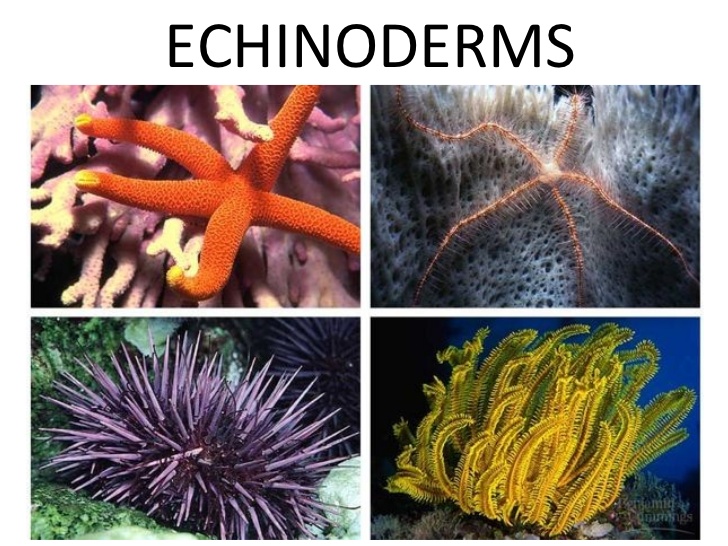 |
| Echinoderms |
Ectotherm; Obtains heat primarily from the environment
Poikilotherm; Temperature regulated primarily by environment
REGULATORS;
Organisms able to use metabolic means to regulate their internal environments in response to environmental changes
Example:
Thermoregulation (Temp. control);
Healthy mammals and birds are able to control their internal temperatures at very constant level.

Osmoregulation (Salt Balance);
- Some species of fish can migrate from salt to freshwater habitats every year with their breeding cycle (they’re called “anadromous” fish)
- Other species can migrate from freshwater to marine habitats every year with their breeding cycle (They’re called “Catadromous” fish)
These fish can maintain constant salt balance in their tissues via their renal system (Kidney and associated structures), even when their environment vary drastically in salinity.
Endotherm
Obtains heat primarily from metabolic reactions
Homeotherm
Temperature regulated primarily by internal homeostatic mechanism
Both Regulators and Conformers need to tolerances in various in environmental challenges within and among species.
Short term responses to environmental changes are known as ADAPTIONS. These are governed by the internal control (homeostatic) mechanisms in the individual, but the limits are set by the Evolutionary History of that individual.
Individual Adaptions may include;
- Physiological Acclimation
Some species are able to Physiologically ACCLIMATE (Gradually change their tolerance levels) in a slowly changing environment, but this ability to is controlled by genes that have been selected over evolutionary time
- Morphological Change
Morphology may change in response to environment (Consider coat change; shape change of Crustaceans to environment)
- Behavioural Adaptation
Behavioural Adaptation allow an animal to respond relatively quickly environmental challenge.
What happens if the Environment changes too rapidly for adaption to evolve?
- Endangered species
- Victim to Climate change
- Wiped out
Homeostasis Process in Animals;
- Osmotic potential of blood waste/excretion (e.g. nitrogenous wastes)
- Chemical constituents of blood/ other tissues and organs (lipids/ sugars- glycogen/ ions (Na+ and K+), pH, Blood Volume/ Pressure
- Gaseous Exchange
- Temperature
- Hormones for reproductive/ Digestion
Negative Feedback loops;
- Direction of compensation is opposite to direction of disturbance
 |
Examples;
- Control of blood pressure
- Blood sugar concentration
- Heat response
- Cold Response
Positive Feedback loops;
- Compensation increases the level of disturbance = amplified response
 | |||
 | |||
Feedforward;
Information serves to alter the set point in regulatory systems. An example might be changes in set point due to accumulation.
- Sexual behaviour – Ejaculation
- Birth
- Urination
- Filling body cavities – Digestion
Some Systems need both Pos +Neg *Human Ovarian+Uterine cycles, ESTROGEN levels unbalanced.
@Science_nerd101 (Twitter)
Subscribe to:
Posts (Atom)