Showing posts with label body. Show all posts

Wednesday, 15 March 2017

Past Paper example

DESCRIBE THE MAIN BEHAVIOURAL ADAPTATIONS FOR CONSEVING HEAT IN MAMMALS.
Adaptations help organisms survive in their habitats or ecological Niche, adaptations can be behavioural or physiological.
 Behavioural adaptations can be inherited or learnt and include tool use, language and swarming behaviour. for example Heat tolerant animals and adaptations for survival in hot places. Many animals try to avoid the heat by hiding away during the hottest parts of the day in burrows and dens. Others have physical adaptations that help body heat dissipate, such as large ears. To avoid being scorched.
but animals that are Cold tolerant  have evolved various methods for coping with very low temperatures. Some animals hibernate, take shelter, or even migrate to warmer areas. Others, such as Antarctic seals, have warm fur and a thick layer of blubber for insulation. where as Arctic foxes have short noses, legs, and ears. But has a big furry tail to wrap around them to isolate them during the icy storms at night. They only hunt during they day to avoid the harsh winter night
      • HOW MIGHT A MARINE MAMMAL BALANCE IT'S CELLULAR OSMOLARITY WITH IT'S ENVIRONMENT?
      Marine Animals are osmoconformers their body fluids are similar to seawater in osmolalrity, so they gain and lose water at equal rates and have no need to expend energy expelling water or salt from the body. However, if they are placed in water more or less concentrated than seawater, their tissues shrink or swell, their organelles and cell membranes are damaged, and they die

      DESCRIBE THE RESPIRATORY PATHWAYS WHICH MIGHT BE EMPOLYED DURING THE FIRST FIVE MINUTES OF MODERATE EXERCISE CARRIED OUT BY AN ATHLETE?

       Nutrients are built upon an understanding of how nutrients such as carbohydrate, fat, and protein contribute to the fuel supply needed by the body to perform exercise. These nutrients get converted to energy in the form of Adenosine Triphosphate or ATP.

      It is from the energy released by the breakdown of ATP that allows muscle cells to contract. However, each nutrient has unique properties that determine how it gets converted to ATP. for example carbohydrates is the main nutrient that fuels exercise of a moderate to high intensity, while fat can fuel low intensity exercise for long periods of time. Proteins are generally used to maintain and repair body tissues, - not normally a power source


      • WHAT ARE THE RELATIVE COSTS AND BENEFITS OF ENDOTHERMY?
      An endotherm is an organism which maintains its body at a metabolically favourable temperature, largely by the use of heat set free by its internal bodily functions instead of relying almost purely on ambient heat.
      therefore....
      1. Endothermic animals can inhabit areas that are too cold for ectothermic animals. They also have the ability to be active even when it is cold. 

       2. Ectothermic animals need far less food. As much as 80% of the food energy acquired by an endothermic animal is used just to keep warm

      • HOW DO ENVIRONMENTAL TEMPERATURE CHANGES AFFECT CELLULAR RESPIRATION IN AN ECTOTHERM?
      An Ectotherm are so called cold blooded animals that rely on external sources such as sunlight or rock faces to heat up there internal bodies. Therefore Environmental temperature is vital to Ectotherms,  if the environment temperature lowers cellular respiration could be affected due to the enzyme structures within the body being affected meaning growth, breathing, sexual interaction, are all depleting slowly.

      • HOW MIGHT AN ECTOTHERM RESPOND TO THESE CHANGES?
      Ectotherms will respond quickly to these changes and find shade to equal there temperature to what it should be or if it needs to be higher they will find sun and bask in it to increase the temperature.

      • WHAT ARE THE MAIN FACTORS AFFECTING THE EFFICIENCY OF GAS DIFFUSION FROM THE LUNG TO THE TISSUES OF AN ANIMAL?
      Temperature (Viscosity of medium)
      Area over which exchange occur
      Concentration gradient
      Distance over which Substance diffuse


      @Science_Nerd101 (Twitter)

      General Homeostasis

      Definition


      Homeostasis is a control of internal conditions be it temperature, specific blood conditions or other variables within living organisms.


       CONTROL =procceds well only within narrow limits (Permitted by temp, enzyme/ Substance availability [Inc. gaseous exchange]; pH, osmolalrity


      The term ‘Homeostasis’ was first defined by French Physiologist, Claude Bernard in 1865.


      CONFORMERS;

      Organisms whose internal conditions are controlled primarily by environment conditions.


      Examples;


      (Temperature Control) Thermoconformers; Most insects cannot control their internal body temperature to any great degree. Rather, their bodies are usually the same temperature as the environment.


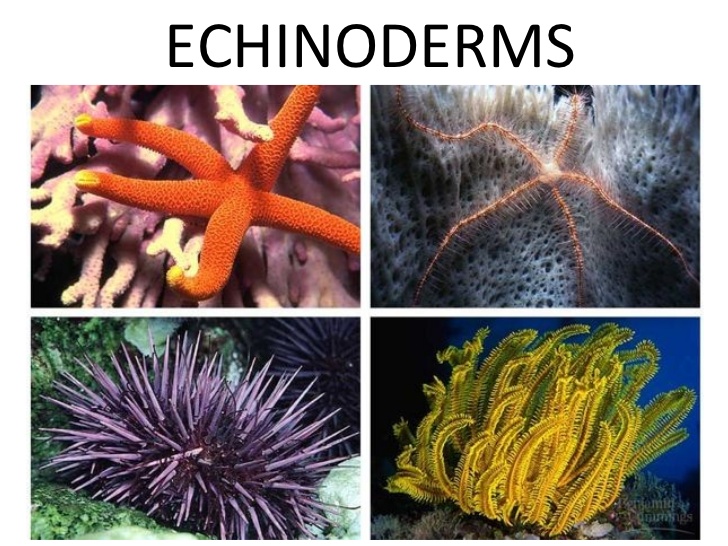
      (Salt Balance) Osmoconformers; Echinoderms (things like starfish, sea urchins etc), entirely lacking an excretory system, are strictly limited to marine environments, and their tissues have the same salinity as sea water.

      Echinoderms
       

      Ectotherm; Obtains heat primarily from the environment


      Poikilotherm; Temperature regulated primarily by environment 


      REGULATORS;

      Organisms able to use metabolic means to regulate their internal environments in response to environmental changes


      Example:


      Thermoregulation (Temp. control);

      Healthy mammals and birds are able to control their internal temperatures at very constant level.


      Osmoregulation (Salt Balance);

      -          Some species of fish can migrate from salt to freshwater habitats every year with their breeding cycle (they’re called “anadromous” fish)

      -          Other species can migrate from freshwater to marine habitats every year with their breeding cycle (They’re called “Catadromous” fish)

      These fish can maintain constant salt balance in their tissues via their renal system (Kidney and associated structures), even when their environment vary drastically in salinity.


      Endotherm

       Obtains heat primarily from metabolic reactions


      Homeotherm

      Temperature regulated primarily by internal homeostatic mechanism


      Both Regulators and Conformers need to tolerances in various in environmental challenges within and among species.

      Short term responses to environmental changes are known as ADAPTIONS. These are governed by the internal control (homeostatic) mechanisms in the individual, but the limits are set by the Evolutionary History of that individual.


      Individual Adaptions may include;

      -          Physiological Acclimation

      Some species are able to Physiologically ACCLIMATE (Gradually change their tolerance levels) in a slowly changing environment, but this ability to is controlled by genes that have been selected over evolutionary time


      -          Morphological Change

      Morphology may change in response to environment (Consider coat change; shape change of Crustaceans to environment)


      -          Behavioural Adaptation

      Behavioural Adaptation allow an animal to respond relatively quickly environmental challenge.


      What happens if the Environment changes too rapidly for adaption to evolve?

      -          Endangered species

      -          Victim to Climate change

      -          Wiped out


      Homeostasis Process in Animals;

      -          Osmotic potential of blood waste/excretion (e.g. nitrogenous wastes)

      -          Chemical constituents of blood/ other tissues and organs (lipids/ sugars- glycogen/ ions (Na+ and K+), pH, Blood Volume/ Pressure

      -          Gaseous Exchange

      -          Temperature

      -          Hormones for reproductive/ Digestion


      Negative Feedback loops;

      -          Direction of compensation is opposite to direction of disturbance


      Examples;

      -          Control of blood pressure

      -          Blood sugar concentration

      -          Heat response

      -          Cold Response


      Positive Feedback loops;

      -          Compensation increases the level of disturbance = amplified response


      Feedforward; 

      Information serves to alter the set point in regulatory systems. An example might be changes in set point due to accumulation.


      -          Sexual behaviour – Ejaculation

      -          Birth

      -          Urination

      -          Filling body cavities – Digestion


      Some Systems need both Pos +Neg *Human Ovarian+Uterine cycles, ESTROGEN levels unbalanced.
       
       
      @Science_nerd101 (Twitter)