Showing posts with label sciencenerd101. Show all posts

Tuesday, 6 June 2017

My Research Over the Past 6 months


Hey Readers,

So I normally put a lot of knowledge on here for many of my readers whether you are a student, general reader, lover of science or just like a read.

Now, I need your help. I have just finished my university course (This is the first time I am revelling my life behind ScienceNerd101). I have been researching Microplastics within the UK

my dissertation was on ‘The Potential Effects of Microplastics on Biodiversity across the South-East Kent Coast’. I am sending this to you due to your help in giving me permission to work on Reculver’s managed site for which I am very grateful for as my data proved to be extremely useful from the area. My name is Georgia Oliver and I have been working on this project for 6 months, I have worked alongside IFCA (Association of inshore fisheries and conservation authorities) whom took water samples using the Florida Awareness method. The reason water samples were taken across the whole of the South-East of Kent was to see the levels of contamination and which areas are affected the most. In contrast 6 sample was taken from a managed site and another 6 from an un-managed to check if there was a break in the chain of microplastic (of which there was not) however there was a fluctuation in species where less microplastic was found, this was due to management skills, and clean ups on the shores stopping oxygen depletion.

This is an effective study to marine research as well as environmental management. If conservation did workshops to educated younger generation to the world of microplastic and marine debris, 80% of plastic may not end up in the ocean as 90% of plastic is microplastic. Therefore, we as humans need to take away that 80% in the future to make an impact.
I am hoping to take a masters’ degree in Ecology and environmental management and would appreciate any help in funding me through this. I do have a GoFund me page that is set up to continue research in this area as I feel this field of research is highly important and I wish to carry on proceeding in this area, All the money made on my GoFund me page is to go towards my research in marine biota and microplastics if you do wish to look at it this is the link below; 


Through my Masters’ degree I have two studies I wish to carry out unfortunately I can only do one. Both contain considering levels of microplastics again comparing them to the levels I have seen this year (2017),

1)      Aims to have more access to shorelines across Kent to check biodiversity Species across the south east to check if the levels of microplastic have affected a vast number of species not just in conservation alone

2)      Aims to use Reculver as a scientific area of study to see how marine biota is being affected by microplastics, test if species if such as filter feeders’ cells are effected, if they are this will show how they get into the food chain in marine research.
 
I would be so grateful for any donations, you will be helping the oceans as microplastics create dead zones meaning oxygen depletion which create zones where fish can no longer live if this continues the oceans will no longer be a place for marine biota. it needs to a matter that is dealt with.
Feel free to contact me.
Thank you,
 
Sciencenerd101.

Tuesday, 2 May 2017

Leaf Eating Pests


Information

  • Leaf eating pests are insect that chew or consume plant tissue
  • Natural insect repellent can be used in some cases
  • Finding holes in the leaves of a plant means its sometimes easier to identify the creature/pest
 

  • Sawflies chew holes that don't go all the way through the leaf, making it look intact but transplant. they have to killed by insecticides.
Sawflies


  • Leaf miners burrow twisting tunnels across leaves another one to use insecticides against
Leaf Miners

  • Sucking insects poke tiny holes in to leaves drawing the nutrition out of them. some examples includes aphids, squash bugs and spider mites. sucking insects can breed rapidly therefore you must act rapidly in order to get fully rid of the pests.
Spider Mites

  • Slugs and snails will also feed on the plant leaves. However this is normally controlled by the natural food chain
Snail and Slug

Other animals:


  • Wood Pigeon
  • Ducks
  • Geese
  • Rabbits
  • Hares
  • Small rodents
  • Deer

Stem-Borrowing Pest

Classification

  • These live within the plants stem, often found stunting growth or killing the apical meristem.
  • May also infect the roots and leaves
  • May be a disease vector

Nematodes

  • Stem Nematodes include Ditylenchus and Aphelencoides spp.

Diagram of Ditylenchus Dipsaci


  • plant pathogenic nematode that primarily infects onion and garlic. It is commonly known as the stem nematode, the stem and bulb eelworm or onion bloat.
  • Live in the roots of the plants to infect their host.
  • Symptoms of infection include stunted growth, discoloration of bulbs, and swollen stems.

Coleoptera

Cabbage Stem- Weevil
 
  • There's species are more often seen from spring to autumn
  • The larvae develops in the stems of the brassicas and then continues its feed from there.
  • Widespread throughout England and Wales
  • Control used to reduce the amount is by seed treatments of gamma-HCH or Sprays of gamma-HCH, Azinphos-Methyl, Azinphos-methyl + demeton-s-methyl sulphone, chlorpyrifos or triazophos. (GRAHAM and GOULD, 1980)

Diptera

Frit Fly Life Cycle Showing that it is constantly living throughout the seasons

 
  • The Frit Fly usually white, yellow and black and are often found in grassy areas.
  • They cause damage to new turf by destroying the stems of ryegrass, fescues and bents (use of larvae)
  • Adult Flies are attracted to white objects and if a sighting of a large number of these flies could indicate larvae
  • Larvae dig tunnels, infect stems and stay through winter
  • Fruit Flies can be controlled by chemical sprays

Lepidoptera

Rose Stem Girdler (Species Unknown)

 
  • Metallic wood boring beetle
  • Flathead larvae is the known youngling of the group they cause the most damage to the rose by borer tunnelling within the pithy centre of the stem.
  • Swollen, gall-like area on canes
  • Canes with wilted, dried leaves
  • Upper portions of canes break off easily during the summer
  • Tunnelling in the lower part of the cane
  • Boring damage and galleries inside of the cane
  • CONTROL; insecticides to kill any larvae and eggs, remove infected plants over the season and over winter  

references;

GRAHAM, C. and GOULD, A. (1980). Cabbage stem weevil (Ceutorhynchus quadridens) on spring oilseed rape in Southern England and its control. Annals of Applied Biology, 95(1), pp.1-10.

Friday, 28 April 2017

Soil and Root Dwellers- Nematodes

Classification;

 
  • Plant-boring pests- Attack the plants roots, tubers, bulbs, rhizomes or the basal regions of the stem
  • Some are disease vectors
  • Above ground feeders- on the leaves above ground in wet weather or dark phase.
 

Nematoda; A virus Vector

  • They are free-living
  • Attack the outside of the plants (ectoparasitic)
  • Live within the plant as well (endoparasitic)
  • These can be classed as either migratory (Moving around form to one place to another) or sedentary (staying in one place)  
Example; Xiphinema spp. (Dagger nematodes)
 
 
This is a soil food web which shows how nematodes are put into the system as a vector under the soil and into animal species as well.


Root-Knot nematodes are plant parasitic nematodes. They exists in the soil where the areas are hot in climate or winters are short. About 5% of global crop loss is due to this nematode, the root-knot development drains the plant's photosynthetic material and nutrients.

Root-knot has a huge economical impact damaging plants and field crop. These nematodes are distributed worldwide and are extremely difficult to control.


Root Knot; Before and After


Thursday, 27 April 2017

The 3 Strategies of survial

K- Strategist

  • Stable environments are labelled by species with a K-strategy
Such animals tend to large, long-lived and invest a large amount of energy into rearing their offspring ensuring they have a higher survival rate.

Elephants are within the  K -species as they rear for their young to induce a higher survival rate therefore most of their energy is placed into that instead of surviving the unstable conditions they have adapted to K-strategist.


Population levels tend to remain stable
(More related to mortality then environmental influences)


R- Strategist

  • Fluctuating Environments are labelled by species in the R-strategy

These tend to be small, short-lived species. whom invest all their energy in producing more offspring then the K species, the population density can get low due to parental care being minimum.


Mice are within the R-strategy as they have so many offspring that minimum care can be giving to all off the offspring from the mother therefore she actually produces a low density due to deaths at young ages.

Low survival rates but tend to maximum use of temporary environments


A table showing the Differences between R and K;

 
Table show the differences between R and K


The graph above shows lifespans of fish which is a R species therefore has a short lifespan but higher density (Blue line) and Dugongs which is a K species which population level tends to remain high therefore it lives longer (red line)


Bet-Hedging

  • Bet-hedging strategies alter strategies according to their environment
some spread their life histories over variables time periods, others respond to their environments by laying eggs and then moving on.


the graph above shows how bet hedging works the growth of the plants is unpredictable by fitness as the plant is using mechanisms of change to survive in unpredictable circumstances.


PESTS! - MAINLY R-STRATEGISTS.

Reproductive stratgegy Theory of Pests

There is the theory that species adopt one of the 3 life strategies in order to survive in a stable and unstable environment.


either of the 3 strategies are below:
  1. r-section
  2. k-selection
  3. bet-hedging

But, What is a Stable environment?

Well it is not the UK! Stable environments are those climates that are relatively constant or easily predictable in there weather and other areas as well for example the tropical rainforest has a constant temperature of around 5/6 degree and a known mist of fog. Therefore, this is a stable environment.


Temperature zones for the Rainforest live on the 27/04/2017


So, What is a Unstable environment?

This is more like the UK, it is an unpredictable environment which varies in it climates. as well as this there is disturbances in the temperature zones.


Temperature Zones for London showing rain in the evening live on 27/04/2017


Therefore Pests need to adapt to the environments by inhabiting to one of the 3 strategies above.


Go to the next Post to Find out more on the Strategies


What is a Pest?


What is a pest?


A troublesome and destructive animal or thing.

Types of Pests:
  1. Nuisances
  2. vectors
  3. competitors of food products for human or livestock consumption.

Competitors- insects that are mainly mankind's biggest threat  

Nuisances- After death the growth of Bactria will grow of this species.  
Vector- carry of diseases to animals of plants


Wednesday, 15 March 2017

Why is The Hardy Weinberg Equilibrum Important

The Hardy- Weinberg Equilibrium principle is very important to the scientific genetic society as;

  • It is the foundation of which almost all the theory of population genetic of sexually- reproducing organisms is based

  • It is a NULL MODEL

  • Deviations give evidence of selection, Genetic drift, gene flow, mutation or non random mating in a population
 
ASSUMPTIONS AND VIOLATIONS OF THE HARDY WEINBERG EQUILIBRUM
 
  • All individuals have equal probabilities of surviving and reproducing. Violated if NATURAL SELECTION (differential reproductive success) occurs
 
  • The population is infinitely large. Violated by GENETIC DRIFT
 
 
  • Genes are not added to or removed from the population by migration. Violated by GENE FLOW
 
 
  • There is no MUTATION
 
 
  • Mating is random. Violated e.g. by INBREEDING AND SEXUAL SELECTION


@Science_nerd101 (twitter)

The Hardy- Weinberg Equilibrum

For a 2 allele situation the Hardy- Weinberg Equilibrium is the best to use......

REMEMBER THIS...

p2 + 2pq + q2 = 1
 
P and Q are the frequencies of the alleles A and a
 
 
p2 + 2pq + q2 = 1
(AA)  +  (Aa)  +  (aa) = 1
 
 
At the Equilibrium, allele frequency does not change over time
 
 
EXAMPLE;
 
A particular species of fish is rarely seen, however we can find eggs and sperm in the water
(these are haploid = 1)  
 
  • The dominant allele 'R' codes for red scale colour
  • The recessive allele 'r' codes for white scale colour
80% where 0.8 had  Dominate 'R'
20% where 0.2 had recessive 'r'
 
RR (p2)- 0.8 x 0.8 = 0.64
Rr (pq)- 0.8 x 0.2 = 0.16
rR (pq)- 0.2 x 0.8 = 0.16
rr (q2) - 0.2 x 0.2 = 0.04
 
add all the numbers together the total should = 1


@Science_Nerd101 (Twitter)


Past Paper example

DESCRIBE THE MAIN BEHAVIOURAL ADAPTATIONS FOR CONSEVING HEAT IN MAMMALS.
Adaptations help organisms survive in their habitats or ecological Niche, adaptations can be behavioural or physiological.
 Behavioural adaptations can be inherited or learnt and include tool use, language and swarming behaviour. for example Heat tolerant animals and adaptations for survival in hot places. Many animals try to avoid the heat by hiding away during the hottest parts of the day in burrows and dens. Others have physical adaptations that help body heat dissipate, such as large ears. To avoid being scorched.
but animals that are Cold tolerant  have evolved various methods for coping with very low temperatures. Some animals hibernate, take shelter, or even migrate to warmer areas. Others, such as Antarctic seals, have warm fur and a thick layer of blubber for insulation. where as Arctic foxes have short noses, legs, and ears. But has a big furry tail to wrap around them to isolate them during the icy storms at night. They only hunt during they day to avoid the harsh winter night
      • HOW MIGHT A MARINE MAMMAL BALANCE IT'S CELLULAR OSMOLARITY WITH IT'S ENVIRONMENT?
      Marine Animals are osmoconformers their body fluids are similar to seawater in osmolalrity, so they gain and lose water at equal rates and have no need to expend energy expelling water or salt from the body. However, if they are placed in water more or less concentrated than seawater, their tissues shrink or swell, their organelles and cell membranes are damaged, and they die

      DESCRIBE THE RESPIRATORY PATHWAYS WHICH MIGHT BE EMPOLYED DURING THE FIRST FIVE MINUTES OF MODERATE EXERCISE CARRIED OUT BY AN ATHLETE?

       Nutrients are built upon an understanding of how nutrients such as carbohydrate, fat, and protein contribute to the fuel supply needed by the body to perform exercise. These nutrients get converted to energy in the form of Adenosine Triphosphate or ATP.

      It is from the energy released by the breakdown of ATP that allows muscle cells to contract. However, each nutrient has unique properties that determine how it gets converted to ATP. for example carbohydrates is the main nutrient that fuels exercise of a moderate to high intensity, while fat can fuel low intensity exercise for long periods of time. Proteins are generally used to maintain and repair body tissues, - not normally a power source


      • WHAT ARE THE RELATIVE COSTS AND BENEFITS OF ENDOTHERMY?
      An endotherm is an organism which maintains its body at a metabolically favourable temperature, largely by the use of heat set free by its internal bodily functions instead of relying almost purely on ambient heat.
      therefore....
      1. Endothermic animals can inhabit areas that are too cold for ectothermic animals. They also have the ability to be active even when it is cold. 

       2. Ectothermic animals need far less food. As much as 80% of the food energy acquired by an endothermic animal is used just to keep warm

      • HOW DO ENVIRONMENTAL TEMPERATURE CHANGES AFFECT CELLULAR RESPIRATION IN AN ECTOTHERM?
      An Ectotherm are so called cold blooded animals that rely on external sources such as sunlight or rock faces to heat up there internal bodies. Therefore Environmental temperature is vital to Ectotherms,  if the environment temperature lowers cellular respiration could be affected due to the enzyme structures within the body being affected meaning growth, breathing, sexual interaction, are all depleting slowly.

      • HOW MIGHT AN ECTOTHERM RESPOND TO THESE CHANGES?
      Ectotherms will respond quickly to these changes and find shade to equal there temperature to what it should be or if it needs to be higher they will find sun and bask in it to increase the temperature.

      • WHAT ARE THE MAIN FACTORS AFFECTING THE EFFICIENCY OF GAS DIFFUSION FROM THE LUNG TO THE TISSUES OF AN ANIMAL?
      Temperature (Viscosity of medium)
      Area over which exchange occur
      Concentration gradient
      Distance over which Substance diffuse


      @Science_Nerd101 (Twitter)

      EXPANDING MY BLOG

      Hey, Science lovers and Readers

      This is a personal message. I am now expanding my blogs to social media.


       TWITTER. if you have twitter follow me on @Science_nerd101 you can ask me question or have a chat, it would be lovely!

      I have finally created the account, got it up and running! it will get better over time.


      I will be posting the recent blogs up there so you can keep up and also the occasional fact and just the reminder of what definitions mean etc....


      @Science_nerd101

      Negative and Positive Feedback Loops

      Negative Feedback

      Negative feedback is an important type of control that is found in homeostasis. A negative feedback control system responds when conditions change from the ideal or set point and returns conditions to this set point.

      Direction of compensation is opposite to direction of disturbance.


      To regulate these things the body needs firstly to detect the level then to respond in an appropriate way.

       For temperature, water and glucose there is a level called the 'norm' (e.g, normal body temperature is 36.9°C).
      If the level gets too high this triggers the body to lower it. If the level gets too low this triggers the body to raise it. This is the principle of negative feedback.


      Examples;
      • Control of Blood pressure
      • Blood Sugar concentration
      • Heat response
      • Cold Response

      Positive Feedback

      Compensation INCREASES the level of disturbance = amplified response.
      Positive feedback is when a high level of something triggers the body to increase it even further

      Neuron Membrane depolarization: A typical positive feedback response

      - Emptying of body cavities (defecation, urination, birth, ejaculation)
      - Filing of Body cavities
      - Sexual Behaviour
      - Muscle

      Feedforward

      Feedforward information serves to alter the set point in regulatory systems. An examples might be changes in set point due to acclimation.


      SOME SYSTEMS NEED BOTH POSITIVE AND NEGATIVE FEEDBACK RESPONSES


      for example the Human Ovarian and Uterine Cycles
      the cycle that women go through,  systems within the body are constantly changing meaning the maintaining levels of Estragon are having to keep changing, therefore both responses are needed


      Overall....
      All control Systems require:
      A sensor
      A reaction mechanism (integrator and effector)
      Communication system (E.g. hormones)


      @Science_nerd101 (Twitter)

      General Homeostasis

      Definition


      Homeostasis is a control of internal conditions be it temperature, specific blood conditions or other variables within living organisms.


       CONTROL =procceds well only within narrow limits (Permitted by temp, enzyme/ Substance availability [Inc. gaseous exchange]; pH, osmolalrity


      The term ‘Homeostasis’ was first defined by French Physiologist, Claude Bernard in 1865.


      CONFORMERS;

      Organisms whose internal conditions are controlled primarily by environment conditions.


      Examples;


      (Temperature Control) Thermoconformers; Most insects cannot control their internal body temperature to any great degree. Rather, their bodies are usually the same temperature as the environment.


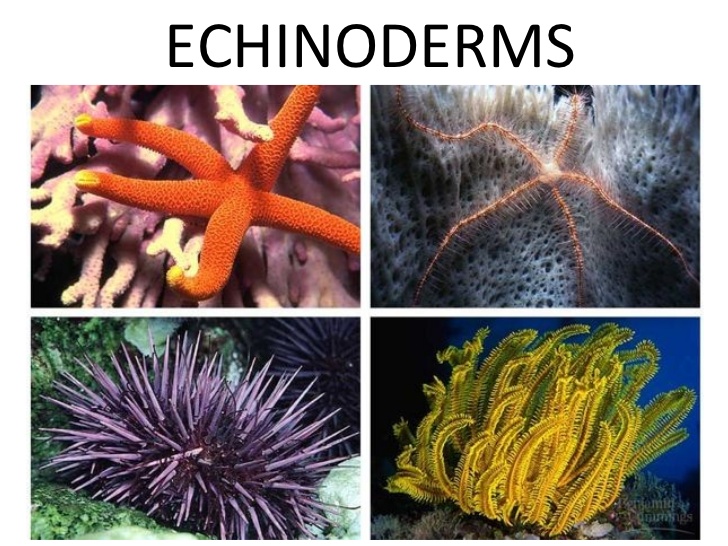
      (Salt Balance) Osmoconformers; Echinoderms (things like starfish, sea urchins etc), entirely lacking an excretory system, are strictly limited to marine environments, and their tissues have the same salinity as sea water.

      Echinoderms
       

      Ectotherm; Obtains heat primarily from the environment


      Poikilotherm; Temperature regulated primarily by environment 


      REGULATORS;

      Organisms able to use metabolic means to regulate their internal environments in response to environmental changes


      Example:


      Thermoregulation (Temp. control);

      Healthy mammals and birds are able to control their internal temperatures at very constant level.


      Osmoregulation (Salt Balance);

      -          Some species of fish can migrate from salt to freshwater habitats every year with their breeding cycle (they’re called “anadromous” fish)

      -          Other species can migrate from freshwater to marine habitats every year with their breeding cycle (They’re called “Catadromous” fish)

      These fish can maintain constant salt balance in their tissues via their renal system (Kidney and associated structures), even when their environment vary drastically in salinity.


      Endotherm

       Obtains heat primarily from metabolic reactions


      Homeotherm

      Temperature regulated primarily by internal homeostatic mechanism


      Both Regulators and Conformers need to tolerances in various in environmental challenges within and among species.

      Short term responses to environmental changes are known as ADAPTIONS. These are governed by the internal control (homeostatic) mechanisms in the individual, but the limits are set by the Evolutionary History of that individual.


      Individual Adaptions may include;

      -          Physiological Acclimation

      Some species are able to Physiologically ACCLIMATE (Gradually change their tolerance levels) in a slowly changing environment, but this ability to is controlled by genes that have been selected over evolutionary time


      -          Morphological Change

      Morphology may change in response to environment (Consider coat change; shape change of Crustaceans to environment)


      -          Behavioural Adaptation

      Behavioural Adaptation allow an animal to respond relatively quickly environmental challenge.


      What happens if the Environment changes too rapidly for adaption to evolve?

      -          Endangered species

      -          Victim to Climate change

      -          Wiped out


      Homeostasis Process in Animals;

      -          Osmotic potential of blood waste/excretion (e.g. nitrogenous wastes)

      -          Chemical constituents of blood/ other tissues and organs (lipids/ sugars- glycogen/ ions (Na+ and K+), pH, Blood Volume/ Pressure

      -          Gaseous Exchange

      -          Temperature

      -          Hormones for reproductive/ Digestion


      Negative Feedback loops;

      -          Direction of compensation is opposite to direction of disturbance


      Examples;

      -          Control of blood pressure

      -          Blood sugar concentration

      -          Heat response

      -          Cold Response


      Positive Feedback loops;

      -          Compensation increases the level of disturbance = amplified response


      Feedforward; 

      Information serves to alter the set point in regulatory systems. An example might be changes in set point due to accumulation.


      -          Sexual behaviour – Ejaculation

      -          Birth

      -          Urination

      -          Filling body cavities – Digestion


      Some Systems need both Pos +Neg *Human Ovarian+Uterine cycles, ESTROGEN levels unbalanced.
       
       
      @Science_nerd101 (Twitter)